Personal Branding Photography
What to Wear for a Personal Branding Photoshoot
Choose personal branding photoshoot outfits that feel natural, fit your professional context and work with the intended images.
By Talissa Viana
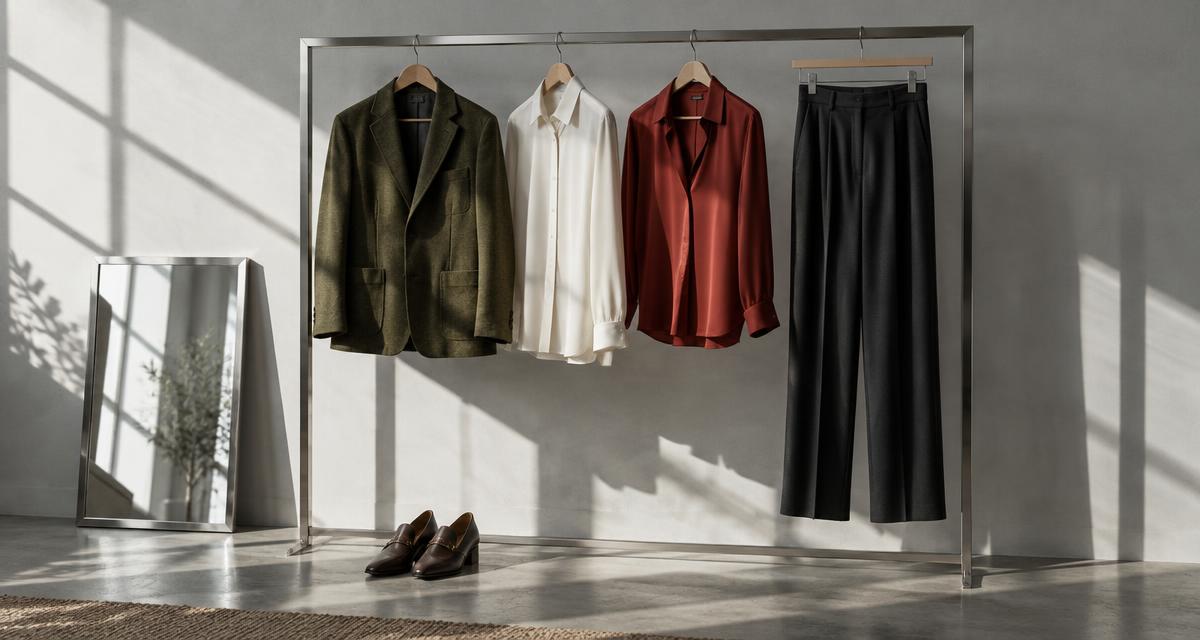
What you wear for a personal branding photoshoot should support the way you want your work to be understood without making you feel disguised. The most useful outfit is not necessarily the most formal or fashionable one. It is the one that feels credible for your professional context and comfortable enough to let your expression remain natural.
Wardrobe decisions become easier when they are connected to the session's purpose. A founder portrait for a business website, a creative portfolio and a professional speaker biography may ask for different degrees of formality. There is no universal uniform for being taken seriously.
Begin with clothes you recognise yourself in
Look at the clothes you already wear when you feel comfortable representing your work. Identify what makes them useful: the fit, the silhouette, the texture or the way they balance ease and intention.
This does not mean everything in your everyday wardrobe will photograph equally well. It means the starting point should be familiar. If you buy something for the session, wear it beforehand and check that it feels natural while sitting, standing and moving.
A photograph can reveal discomfort in small ways. Constantly adjusting a collar or protecting a restrictive outfit draws attention away from the person. Practical ease is part of a refined visual result, not the opposite of it.
Match the professional situation
Consider where the photographs will appear and who will see them. The question is not simply “Does this look professional?” It is “Does this look appropriate for the way I actually work?”
An outfit can be polished without being formal. Conversely, a familiar professional jacket may be exactly right if it belongs to your usual context. Avoid borrowing a visual code solely because it looks authoritative on someone else.
If your work spans several environments, plan a small amount of meaningful variation. One outfit might be suitable for a direct profile portrait, while another allows a more relaxed environmental image. The collection can show range without suggesting unrelated professional identities.
Think in colour relationships
Clothing interacts with skin, background, light and the wider visual identity of your website. Rather than choosing colours in isolation, consider the whole composition.
A strong colour can be effective when it is deliberate. Softer or quieter colours can give more attention to expression and texture. Neither is automatically better. Bring options that fit your existing visual language, and discuss how they will work against the planned backgrounds.
You do not need to dress in your exact brand colours. Repeating a website palette too literally can look artificial. A more subtle relationship—warmth, contrast or a compatible accent—may create enough continuity.
Use texture and silhouette intentionally
Texture gives an image detail without necessarily making it busy. Knitwear, denim, cotton or a structured jacket each create a different visual impression. Choose materials that feel relevant to you and appropriate to the season and location.
Check how fabric behaves in movement and how it falls when seated. A garment that looks good on a hanger may bunch or pull in a portrait. Very fine repetitive patterns can also be distracting on screen; if you are unsure, bring a simpler alternative and test both.
Silhouette matters more than a label or trend. The aim is a balanced shape that lets the person remain the main subject. Fit should be considered without turning the session into a judgement about your body.
Create variety with fewer, better choices
Start with a base outfit
Choose one complete look you trust. Include footwear and accessories so it is ready as a whole. This gives the session a stable starting point rather than a series of unresolved wardrobe decisions.
Add one purposeful change
A jacket, overshirt or different top can change the visual tone without requiring a completely new outfit. Think about whether the change adds a useful image situation, not simply another photograph.
Keep accessories connected to you
Glasses, jewellery or a watch may be part of how people recognise you. Use them intentionally, but avoid adding items solely to imply status. If glasses reflect light, the photographer can adjust the setup rather than assume they must be removed.
Prepare everything before the day
Try on your selections together and take simple phone photographs from the front and side. These are not a beauty test; they help you notice practical issues such as a visible underlayer, an uncomfortable neckline or a length that changes when seated.
Steam or iron garments as needed and transport them in a way that limits creasing. Bring a backup for an essential piece. Remove temporary labels, check pockets and keep personal items out of view unless they belong in the photograph.
Discuss changing arrangements and time with the photographer. The wardrobe plan should fit the session, not consume it.
Let clothing support the person
The objective is not to follow a trend, conceal yourself or become a more impressive character. It is to create images in which your clothing, expression and professional story feel coherent.
Identity Builder™ and Next Chapter™ offer relevant starting points for planning that visual direction. The broader photoshoot preparation guide can help connect wardrobe choices with location and intended use.
If you are unsure what to bring, start with one outfit that feels genuinely like you and one alternative with a clear purpose. That is a better foundation than a suitcase full of clothes chosen for someone else's professional image.