Professional Image & Perception
Your Work Has Evolved. Has Your Professional Image?
Assess whether your photographs still reflect your experience, current work and professional direction—and what genuinely needs updating.
By Talissa Viana

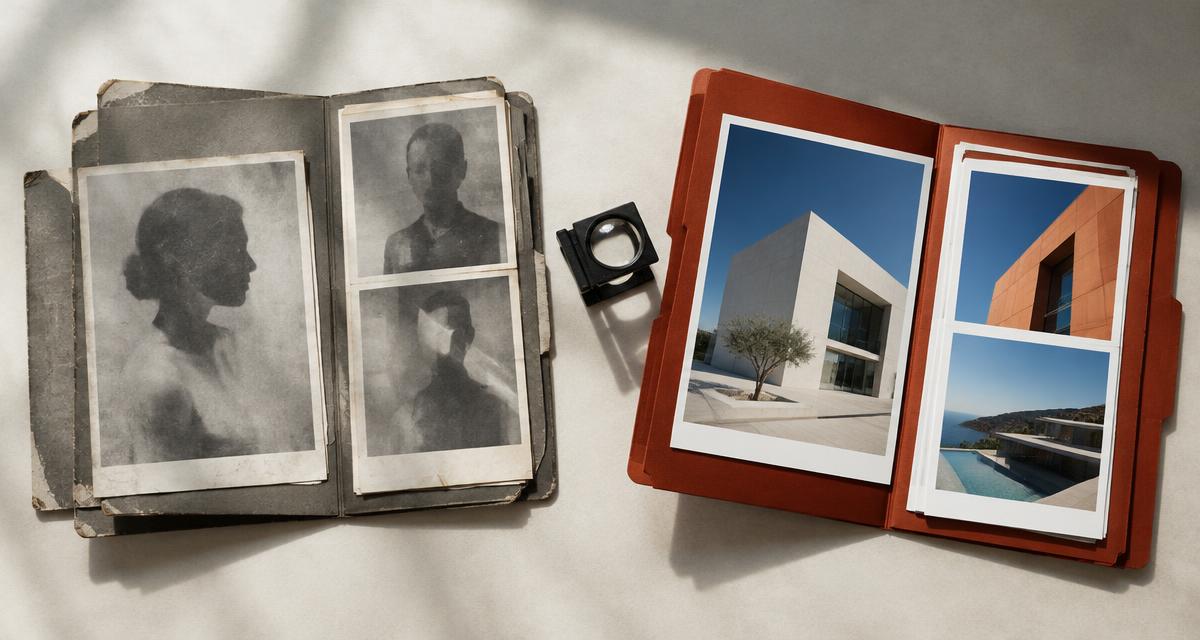
Professional growth rarely arrives as a single announcement. Your judgement becomes sharper, your work more focused and your responsibilities more substantial. Meanwhile, the photographs on your website may remain unchanged. Over time, the way you present yourself can begin to describe a professional chapter you have already left behind.
Updating your professional image is not necessarily about looking different. It can be about giving your current work a more accurate visual context. The useful question is not “Do I look impressive enough?” but “Does this still help people understand the person and professional I am now?”
The gap can be quiet
An outdated photograph is not always visibly old. It may be technically good, flattering and perfectly suitable for the role you held when it was made. The mismatch comes from what surrounds it: different services, a different audience or a more developed way of working.
For example, a portrait originally made for an internal team page might still work as a profile image but offer little context for a new independent practice. The photograph has not failed. Its original purpose has simply become narrower than your current communication needs.
Recognising that difference helps avoid unnecessary criticism of your appearance. This is a question of relevance, not a demand to look younger, more formal or more successful.
Notice what has actually changed
Your expertise
You may now work with more complex questions or draw on experience that was not part of your earlier professional story. Your communication should give that development a place without relying on visual shortcuts such as a more expensive setting or a more serious expression.
Your audience
The people you need to reach may have changed. An image should be considered within their context, alongside your language and the situations in which they encounter you. This is not about trying to please everyone; it is about communicating clearly to the people for whom the work is relevant.
Your services and direction
If you have refined your offer, a collection created around an older activity may no longer be representative. Images of actual working context, appropriate environments and current professional expression can support the new narrative more naturally.
Audit your current photographs
Open your website and professional profiles as if you were encountering them for the first time. Read the introduction, then look at the images. Do the two describe a coherent professional direction?
Look for practical friction. Are you avoiding a useful photograph because it no longer feels like you? Are you using the same portrait across several unrelated pages because no alternatives exist? Are collaborators repeatedly asking for an image you cannot provide?
Then separate the issues. Some can be solved by changing a crop, improving image selection or updating surrounding words. Others require new photographs. An audit should reveal what is missing, not assume the entire collection needs replacing.
Updating is not the same as performing status
It is easy to confuse a more developed professional image with a more formal or luxurious one. But visual maturity can also be quieter: more deliberate compositions, a better relationship between image and copy, or a more natural expression.
A setting or outfit should have a reason to be there. Borrowed symbols of authority may create a polished surface while making the communication less honest. The photographs should help someone recognise your professional world, not suggest a lifestyle or identity that is unrelated to it.
The difference between looking professional and communicating professional value is useful here. Refinement is about intention, not imitation.
Decide what the next collection needs to include
Start with your current communication needs rather than a mood board of attractive images. List the pages, profiles and materials that require photography. Note where a direct portrait is enough and where a wider or contextual composition would help.
Consider the parts of your work that can be shown truthfully. A real workspace, a relevant object or a natural interaction may provide useful context. Not every profession has a visually obvious process, and there is no need to stage one just to create variety.
Discuss the degree of continuity you want with your existing images. An update can preserve what still works while introducing a clearer direction.
Questions worth bringing to the conversation
What has changed since your last session? Which parts of your current work are absent from your visual communication? What do you want someone to understand before they contact you? Where are the photographs most likely to be used?
Also ask what should stay the same. Perhaps you value the ease of your existing portrait or the simplicity of its setting. Professional evolution does not require discarding every familiar visual choice.
Write the answers plainly. They do not need to sound like brand strategy language to be useful. Specific observations give a photographer more to work with than a broad request to look “more elevated.”
Let the image catch up with the work
If your existing photographs belong to an earlier professional chapter, explore Next Chapter™. Looking through the portfolio can also help you identify the kinds of expression and context that feel connected to you.
The next step is not to become a different person for the camera. It is to create a visual presence that gives your current work an appropriate setting—so the photographs no longer ask people to imagine the professional you have already become.